Old house renovation
5 Things to Look for Before Buying an Old House
There is a lot to love about an old house. High ceilings, original timber, leadlight and all the little details that have survived for generations can give an old home a character that is difficult to recreate. But when you're walking through an inspection imagining what you could do with the place, it is also very easy to overlook the less exciting stuff. Having bought and renovated a house that was more than 100 years old, there are a few things I would pay much more attention to if I was buying another one. Some could mean expensive work. Others could completely change what you're able to do with the property. And some are surprisingly easy to check.
1. Take a marble and check the floors
One of the best little tricks I learned when we were looking at old houses was to take a marble to the inspection.
Put it on the floor and see what happens.
If it quickly rolls across the room, you've got a pretty good indication that the floor isn't level.
That doesn't automatically mean the house needs restumping. Old houses move and an uneven floor can have a number of causes.
But it gives you something to investigate.
With an old house, I would want to know whether it has previously been restumped, when the work was done and what condition the current stumps and foundations are in.
Also look for things like cracks, uneven floors and doors or windows that don't sit properly.
A marble obviously isn't a substitute for a professional building inspection, but it can reveal something you might not notice while you're walking around looking at kitchens and bedrooms.
If the marble starts making a determined journey towards the other side of the room, I'd be asking questions.
2. Check the overlays before planning your dream renovation
This is something I would pay much more attention to now.
Our house was affected by a heritage overlay.
That matters if part of the reason you're buying an old house is because you're imagining what it could become.
You might be picturing an extension, changing the front of the house, moving things around or undertaking a major renovation.
Before getting too attached to those plans, find out what planning controls apply to the property.
Check with the relevant council and look at the overlays affecting the land.
A heritage overlay doesn't necessarily mean you can't renovate. But it can influence what you can change and what approvals you need.
Other planning controls may also affect what you have in mind.
If a particular renovation is an important part of your decision to buy the house, I would want to understand whether it is actually possible before buying.
You can repair a roof.
You can replace stumps.
Finding out after you've bought the property that you can't create the house you imagined is a different kind of problem.
3. Look up at the roof
Our corrugated iron roof was more than 100 years old.
It looked pretty terrible.
There was rust and there were some holes, and at first glance it would have been very easy to assume the whole thing needed replacing.
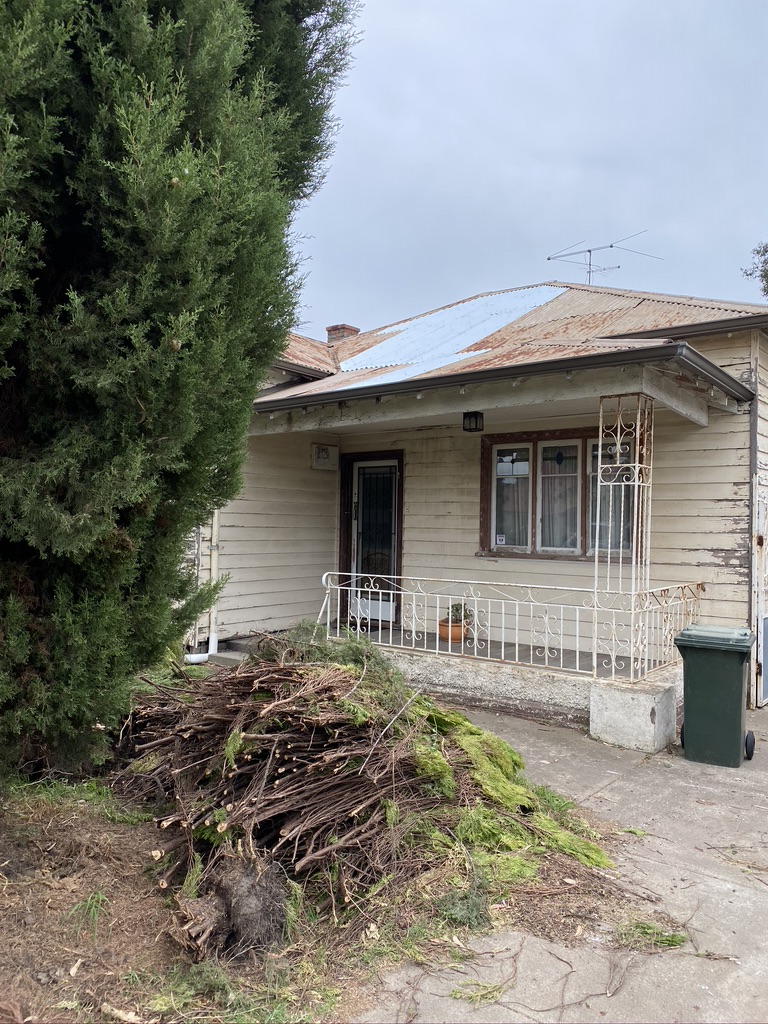
In our case, it didn't.
We patched the holes and painted the existing roof instead.
We actually painted it with ordinary brooms because the bristles worked really well with the shape of the corrugated iron.
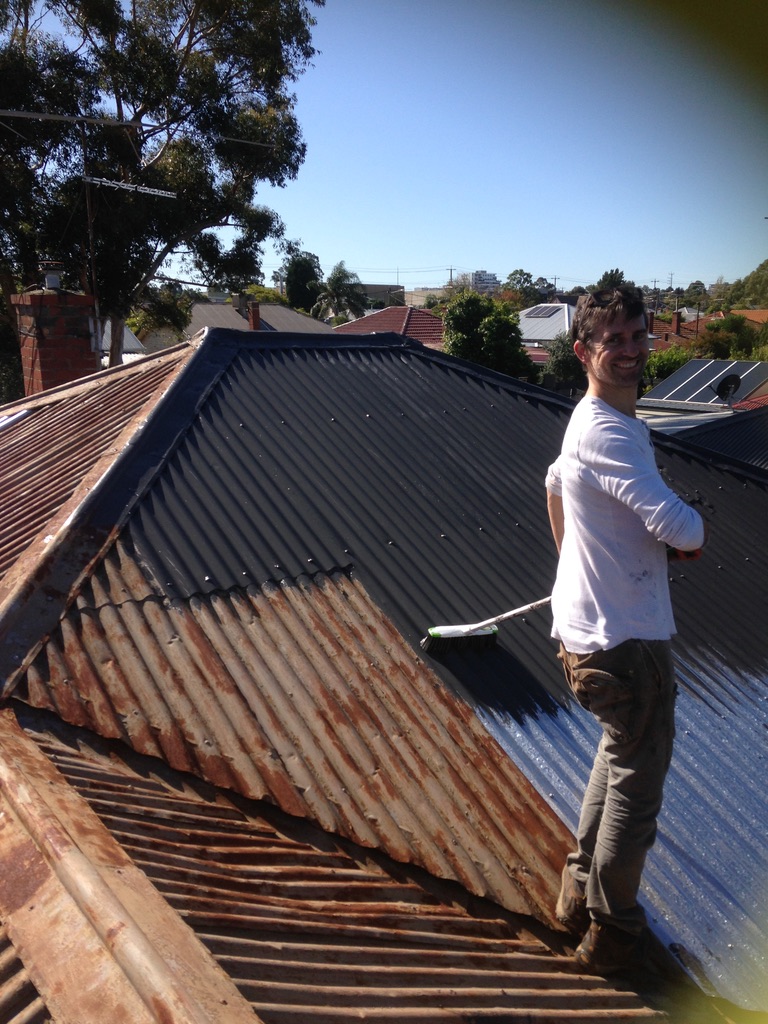
It cost very little compared with replacing a roof and completely changed the appearance of the house.
You can see the full project in our article about painting our 100 year old metal roof.
But every roof is different.
If you're looking at an old house, find out what condition the roof is actually in rather than making assumptions in either direction.
Is there rust?
Are there leaks?
Has it been repaired?
How much life is realistically left in it?
If it does need replacing, that's something you want to know before you've spent your renovation budget on the fun stuff.
4. Think about asbestos and what's been added over the years
A 100 year old house hasn't necessarily remained untouched for 100 years.
It may have been altered, extended and renovated multiple times.
That means you aren't only dealing with the materials used when the house was originally built. You're also dealing with whatever subsequent owners added.
Asbestos is an obvious thing to consider.
If there is any concern that materials could contain asbestos, don't rely on appearance or try to identify it yourself. Get appropriate professional advice and testing before disturbing it.
This becomes particularly important if you're buying the house with plans to renovate.
Something that looks like a straightforward demolition job can become much more complicated if hazardous materials are discovered.
I would want to understand as much as possible about the different stages of the house before deciding what the renovation might involve.
5. Get a building inspection, then decide what you can live with
I would always get an independent building inspection when considering an old house.
You want someone who knows what they're looking at to assess the structure and identify issues you might completely miss during a normal inspection.
But the building inspection is only part of the decision.
The other question is:
What can you live with, and what can't you?
Old houses are rarely perfect.
The floors might slope a little.
The windows may need work.
There might be draughts.
The kitchen might be ancient.
There may be strange alterations from previous decades and a list of jobs that could keep you occupied for years.
That doesn't necessarily make it a bad house.
What matters is understanding the difference between something you simply don't like and something that actually needs to be fixed.
When we bought our house, we knew we couldn't afford the major renovation we eventually imagined doing.
So we did an interim renovation instead.
We improved the kitchen, bathroom, lounge, storage and exterior and made the house somewhere we enjoyed living while we saved for the bigger renovation.
Then our plans changed and we sold before the big renovation ever happened.
What Renovating a 100 Year Old House Taught Us explains how that experience changed the way I think about renovation.
You don't necessarily need to fix everything immediately.
But you do need to know what you're buying.
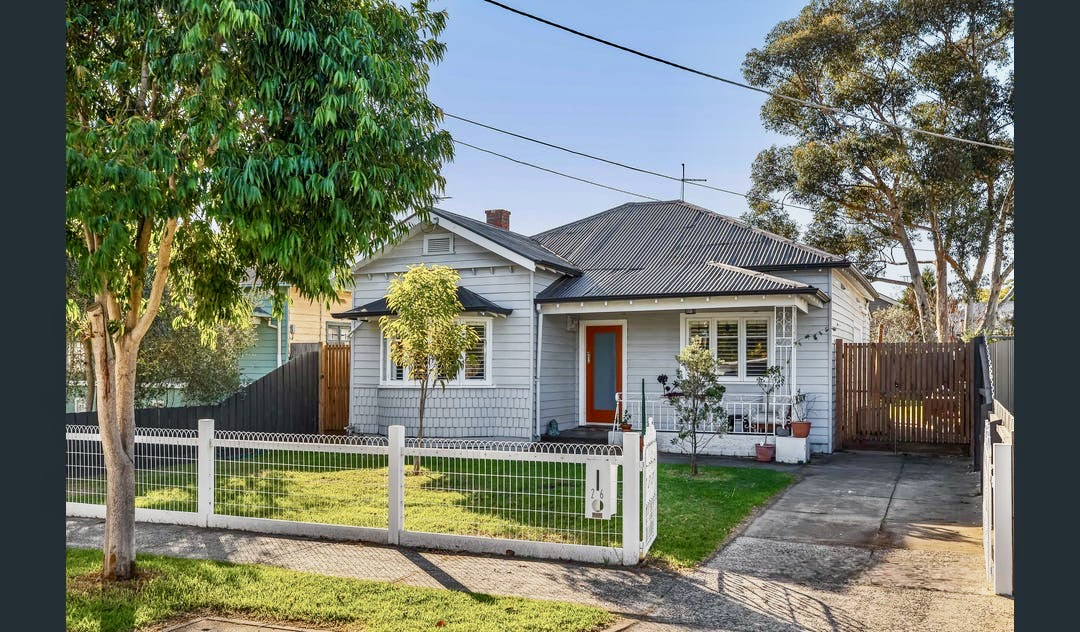
What I would want to know before buying another old house
If I was inspecting another old house, I wouldn't expect it to be perfect.
I'd want to know:
What condition is the structure in?
Has it been restumped?
What is happening with the roof?
Could there be asbestos or other issues hidden within previous renovations?
What planning controls apply?
Can I actually do the renovation I'm imagining?
And finally, what am I happy to live with?
There is a big difference between an old kitchen that you can happily use for another five years and a major structural problem that needs addressing immediately.
The aim isn't to find an old house with nothing wrong with it.
It's to understand the house well enough to decide whether its problems, quirks and restrictions are ones you're willing to take on.
The garden matters too. Clearing our overgrown garden taught us to look at large trees, council permits and what might be happening underground.
And take a marble.
More from Great Ocean Road Living