Our Home renovation
The Worst House on the Street
Introduction
Sometimes the best homes don't make a great first impression.
When we were looking to buy our first family home, we had a very clear idea of what we wanted. We weren't searching for a perfectly renovated house. We were looking for potential.
Our wish list wasn't complicated: a generous block, a north-facing backyard, enough room for our young family to grow, and a location we loved.
We had been searching for quite some time when a friend, who worked as a real estate agent, mentioned a house that hadn't even been listed yet. It was being sold off market, and he thought it might be worth a look.
At the time we were living just around the corner, so I put my child in the pram and walked over.
I still remember standing on the nature strip outside the front gate.
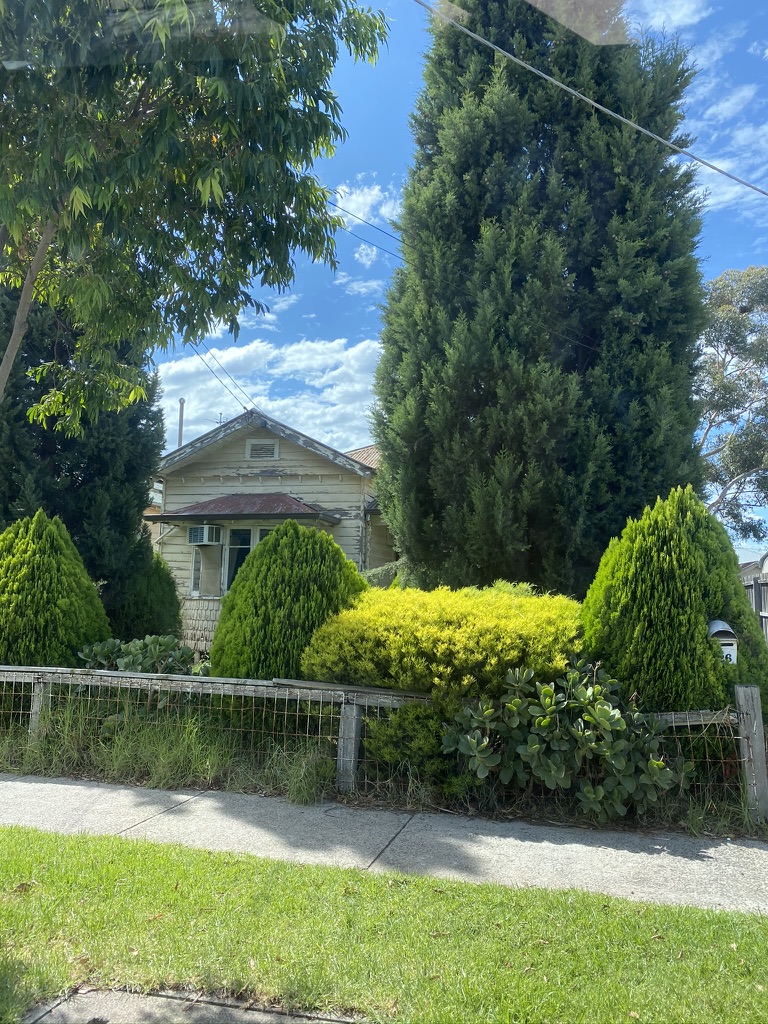
The front garden was completely overgrown. Two enormous pine trees towered over the house, blocking almost everything from view. Most people probably saw an old house that had been neglected for years.
I saw a beautiful Californian bungalow waiting for someone to love it again.
One of the first things I noticed was how peaceful the street felt. Despite being in the middle of Melbourne, it was incredibly quiet. It immediately felt like somewhere we could imagine raising our family.
Sometimes you just know.
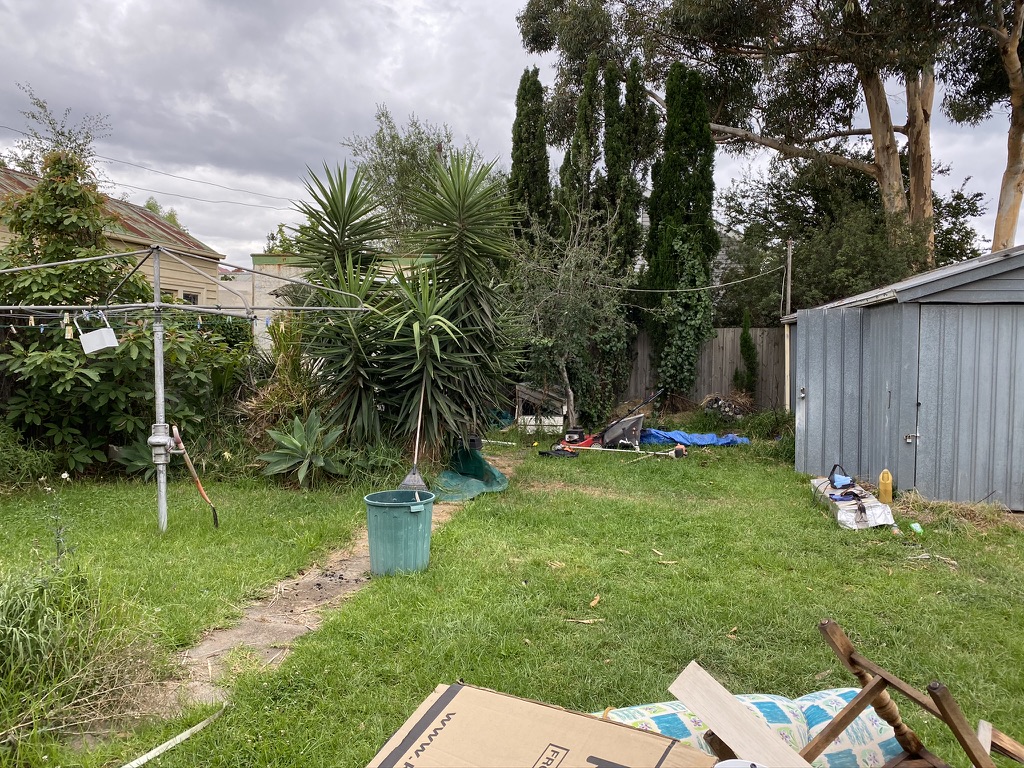
Looking Beyond the Mess
Walking through the house only confirmed that it needed plenty of work.
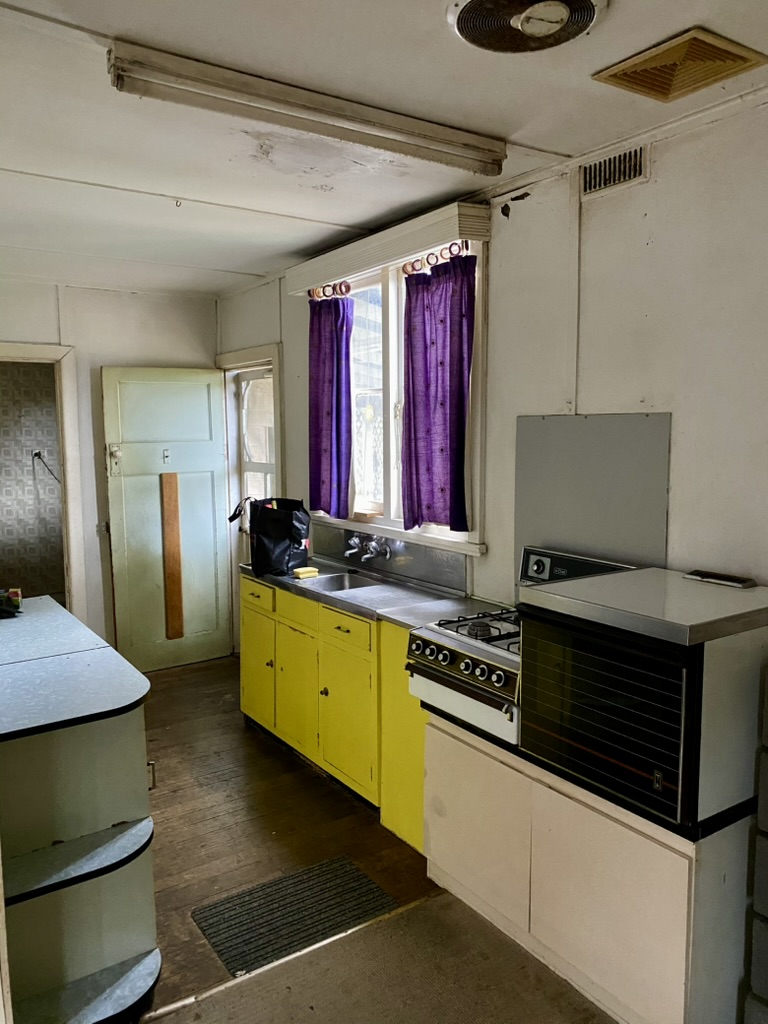
The kitchen had seen better days.
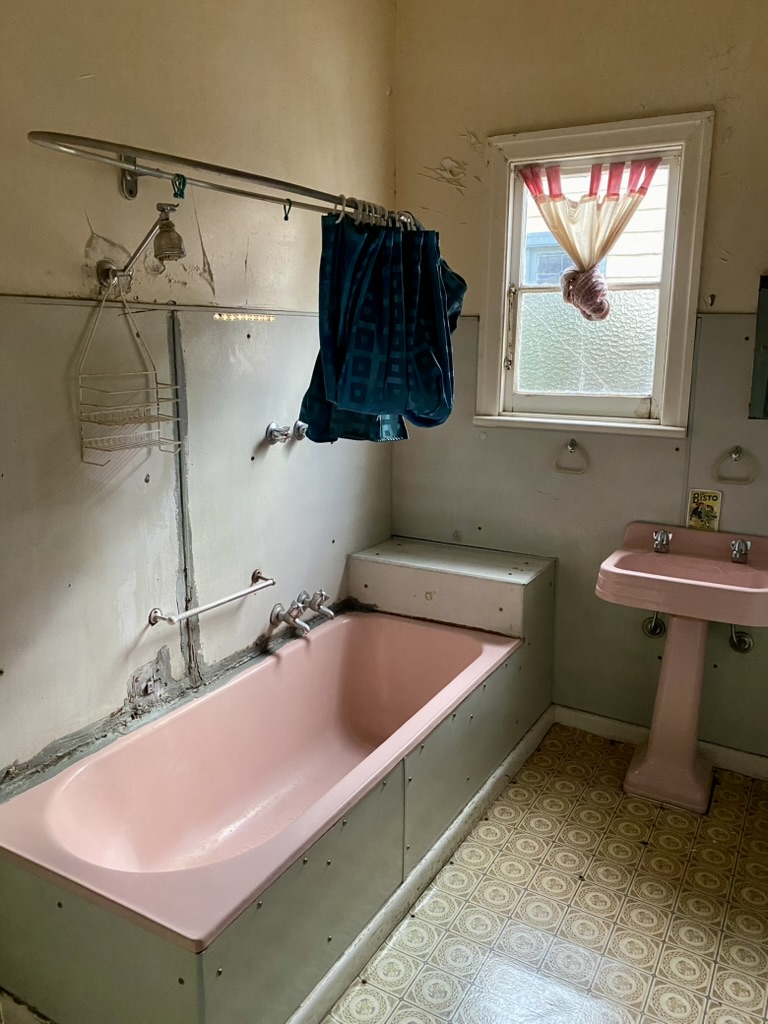
The bathroom was bright pink.
There were no built-in wardrobes.
The verandah was falling apart.
The only toilet was outside.
Every room seemed to have another project waiting.
But none of those things worried me.
They were all problems that could be fixed.
What couldn't be changed was the orientation of the block, the character of the house, the beautiful proportions of the rooms and the feeling the place gave us the moment we arrived.
Those things were priceless.
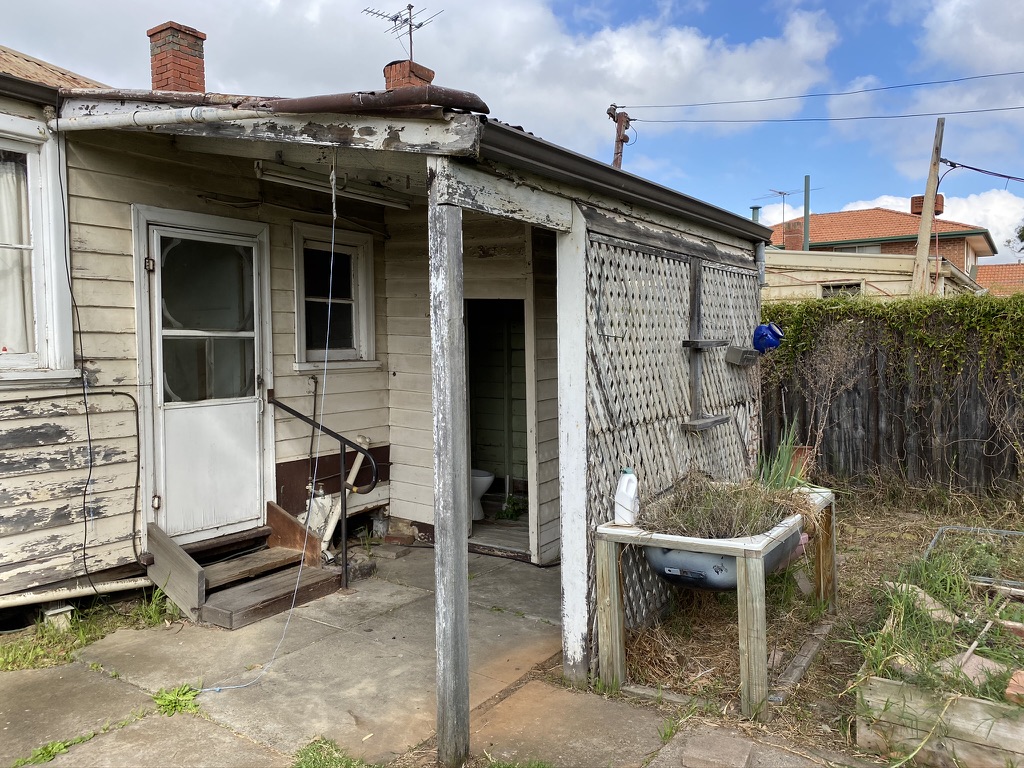
Good Bones Matter
Before buying the house, I arranged a building inspection.
I was expecting a long list of expensive structural problems.
Instead, the inspector gave me some of the best news I could have hoped for.
For a house of its age, it was in remarkably good condition.
It had already been restumped.
Apart from a small hole in the roof, there were no major structural concerns.
It reminded me of something that has stayed with me ever since.
Cosmetic problems often look frightening, but they're usually much easier to fix than structural ones.
The house had good bones.
Everything else could come later.
Discovering What Was Hidden
As we began renovating, the house slowly started revealing its secrets.
Underneath the old carpet were beautiful timber floorboards that had been hidden away for decades. A few boards had holes that needed replacing, but overall they were in wonderful condition.
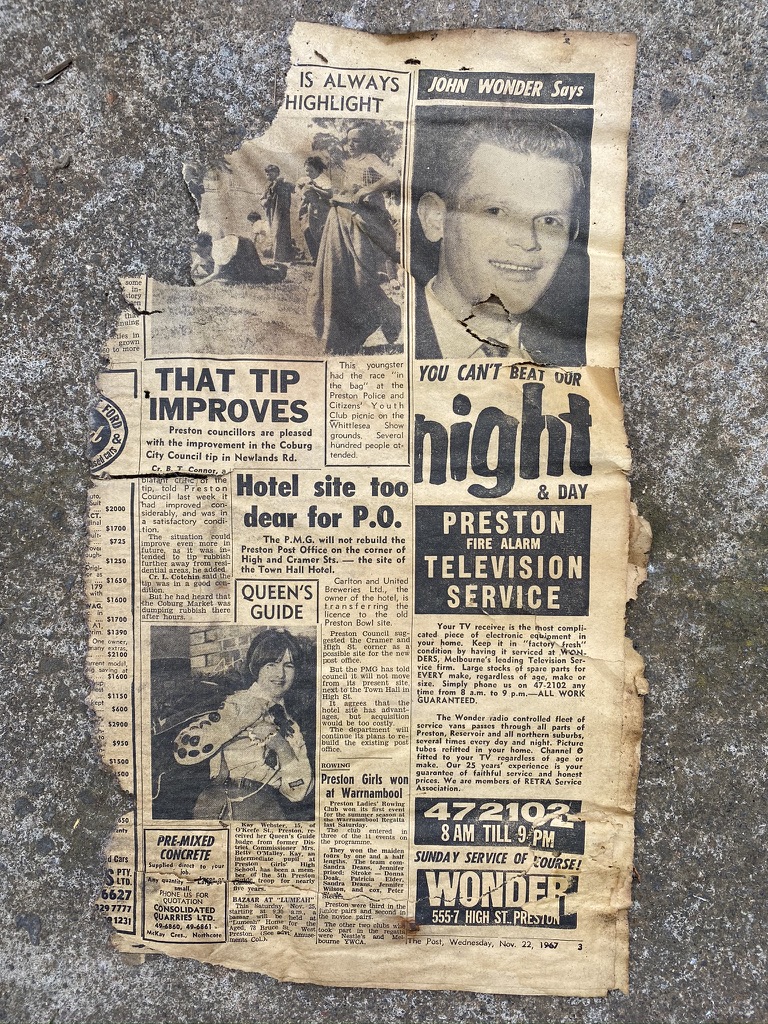
Cleaning out the house felt like uncovering layers of history.
We found old newspapers.
Years of rubbish tucked away inside and throughout the backyard.
Then there were the unexpected treasures.
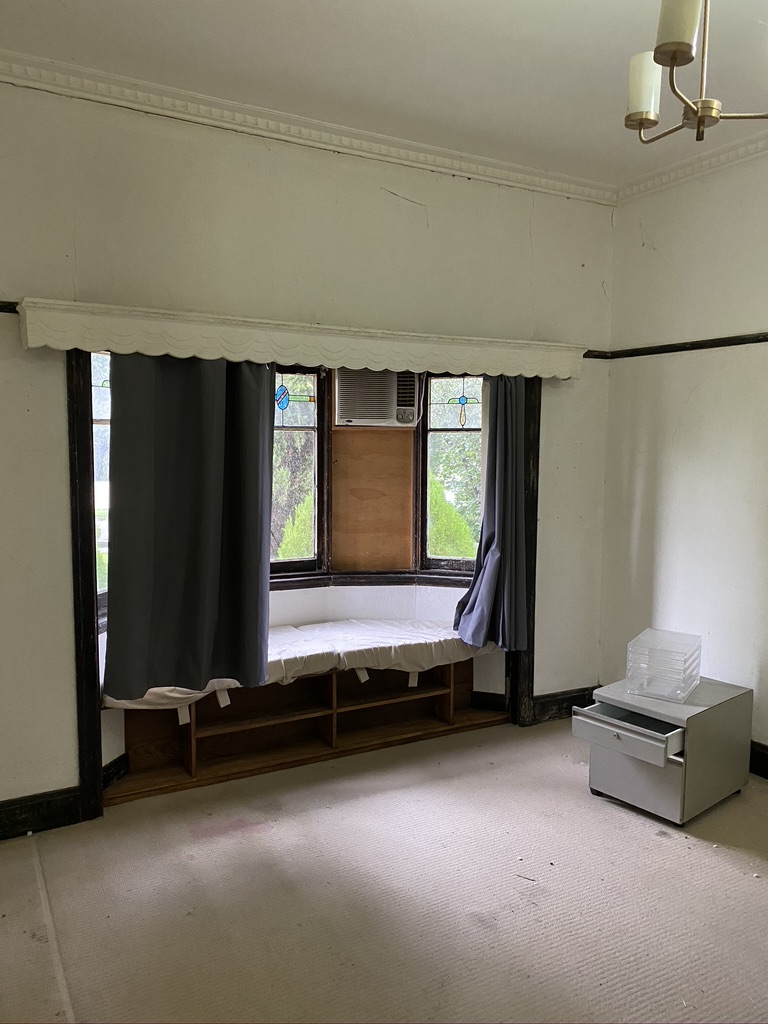
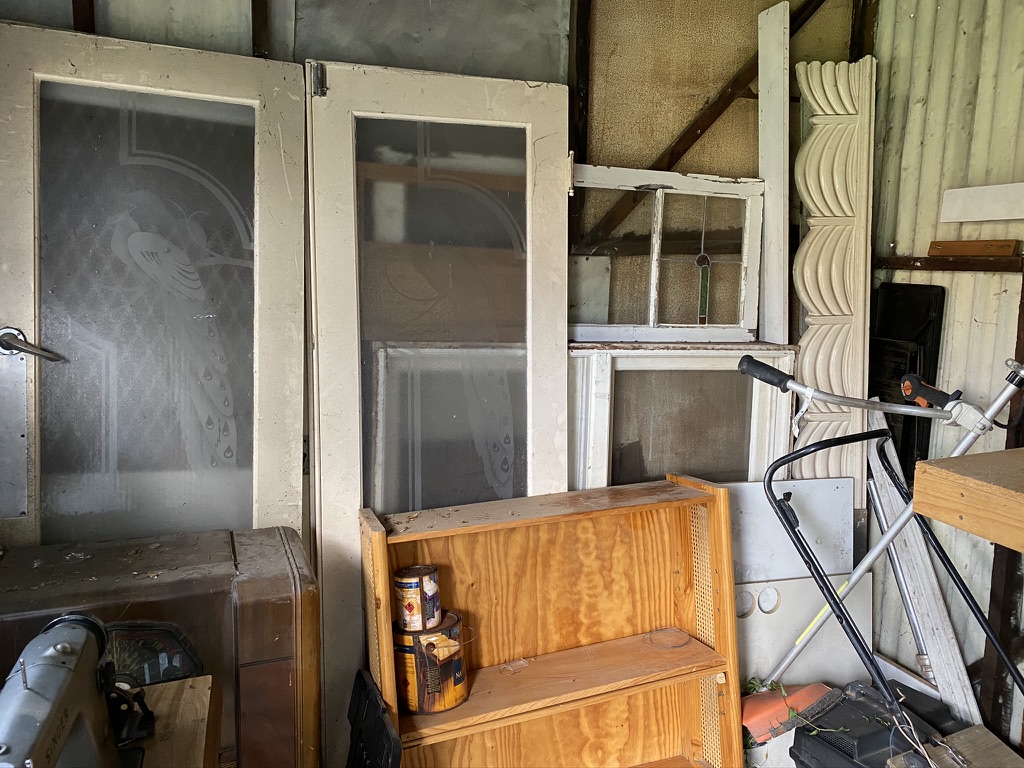
At some point, someone had removed one of the original bedroom windows to install an air conditioner.
Fortunately, they hadn't thrown the window away.
I found it stored in the shed, and we were able to restore it to its original place.
In that same shed were beautiful leadlight doors featuring peacocks.
Finding them felt like discovering part of the home's personality that had almost been lost.
The more we looked, the more we realised this house wasn't just old.
It had a story.
Learning the History
As we renovated, I also learned more about the street itself.
Because the area is protected by a Heritage Overlay, I discovered that all of the homes had originally been built to the same design, simply mirrored from one another.
It reminded me of the neighbourhood in Edward Scissorhands—each house almost identical, but with its own personality shaped by the families who had lived there.
Even many of the original doors and light fittings had been the same.
Wherever possible, we restored rather than replaced them.
Every original feature we could save made the house feel a little more connected to its past.
The First Big Change
The very first project wasn't inside the house at all.
Those two enormous pine trees that had greeted me on my first inspection had to come down.
Because they were so large, we needed council approval and a qualified arborist to remove them safely.
Once they were gone, the transformation was immediate.
Light flooded into the garden.
For the first time, we could really appreciate the house sitting proudly on the block.
It was the beginning of many more changes to come.
(I'll tell the full story of transforming the garden in another article.)
Looking Back
People often ask whether buying a house in such poor condition was worth it.
For us, the answer is simple.
Absolutely.
If there's one thing this renovation has taught me, it's that you should never judge a home by the things that have simply been neglected.
Paint can be refreshed.
Gardens can be reclaimed.
Bathrooms and kitchens can be rebuilt.
Carpet can be lifted.
Even missing windows can find their way home again.
But you can't create character.
You can't move a house to a better street.
You can't change the orientation of the block.
And you can't manufacture the feeling you get when you stand outside a house for the very first time and imagine what it could become.
Sometimes, underneath years of neglect, you'll find a gem.
You just have to be willing to look for it.
More from Great Ocean Road Living